
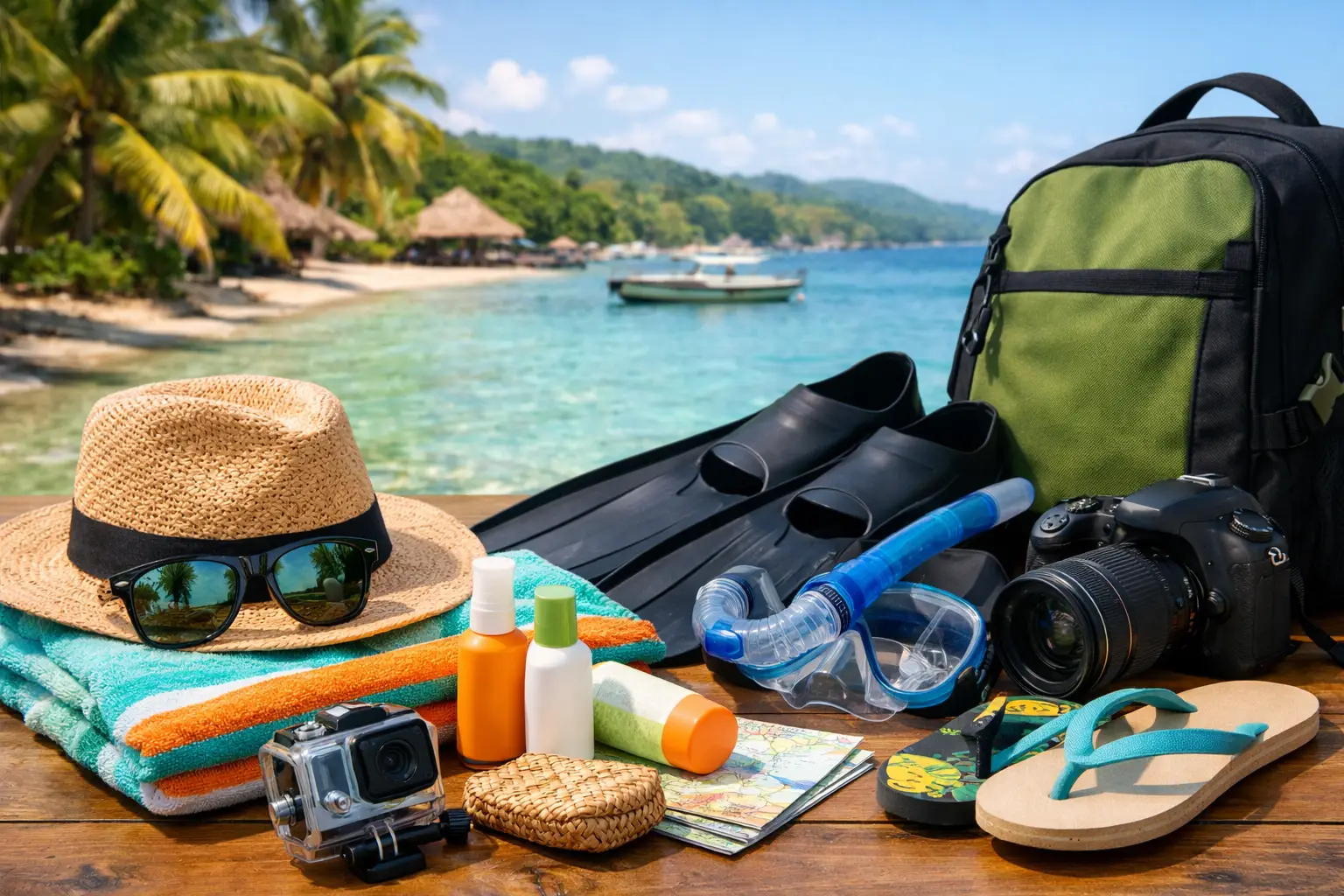
A great Jamaica day trip can include a waterfall climb, a beach stop, winding mountain roads, and lunch with a view – sometimes all before you return to your hotel. This Jamaica excursion packing checklist helps you prepare for the real conditions of the day, not just the photo opportunity. Pack for heat, water, changing weather, and the specific attraction on your itinerary.
Start With Your Excursion Type
Jamaica is warm year-round, but not every outing calls for the same bag. What you bring for Dunn’s River Falls or Blue Hole will be different from what makes sense for a Rose Hall Great House visit, a Nine Mile cultural tour, or an evening at the Luminous Lagoon.
First, check the activities included in your day. Waterfalls, river stops, beaches, and boat trips mean you should expect to get wet. Caves and heritage sites may be drier, but they can involve uneven paths, stairs, or warmer enclosed spaces. Long-distance trips to places like Negril, Portland, or Kingston can mean several hours in the vehicle, so comfort matters just as much as sightseeing clothes.
If you are joining a private tour or chauffeur-led day, keep your essentials in one small, easy-to-carry bag. You do not want to sort through a large suitcase at every stop. A lightweight backpack, crossbody bag, or small waterproof day bag is usually enough.
Jamaica Excursion Packing Checklist
The essentials below work for most full-day Jamaica excursions. Adjust them based on the season, your hotel location, and whether your itinerary includes water activities.
- Government-issued photo ID and any required tour confirmation details
- Cash in small bills for souvenirs, optional tips, snacks, or local vendors
- A credit card or backup payment method kept separately from your cash
- A fully charged phone and a compact portable charger
- Refillable water bottle, especially for active or long road-trip days
- Reef-conscious sunscreen, lip balm with SPF, sunglasses, and a hat
- Insect repellent for outdoor, river, evening, and rural experiences
- Basic medications, motion sickness relief if needed, and a few bandages
Bring only what you will use. Leave passports, expensive jewelry, and extra valuables secured at your accommodations unless you have a specific reason to carry them. Jamaica’s attractions are best enjoyed when your hands and attention are free.
Clothing That Works Beyond the Resort
Choose light, breathable clothing that can handle heat and humidity. Quick-dry fabrics are especially useful when your day includes a waterfall, beach, or unexpected shower. A swimsuit under your clothes saves time at water stops, but bring dry underwear and a light change of clothes for the ride back.
For most excursions, shorts, a breathable top, and a cover-up are practical. If you are visiting a heritage attraction, dining after your tour, or heading to a more upscale venue, pack a slightly neater outfit. Resort wear is fine for the beach, but it may not be the best choice for every stop on an all-island itinerary.
A light rain jacket or compact poncho is worth carrying, particularly in the wetter months. Rain showers can be brief, but the ground and rocks can stay slippery afterward. A small towel or microfiber towel also earns its place in your bag when waterfalls or beach time are involved.
Footwear Is a Safety Decision
Footwear can make or break an active Jamaica excursion. Flip-flops are easy for the pool and beach, but they do not provide enough grip for climbing wet rocks or walking uneven trails.
For Dunn’s River Falls, Blue Hole, river activities, and similar locations, wear water shoes or closed-toe aquatic sandals with a secure heel strap and solid tread. They protect your feet and are far less likely to slide off in moving water. Some attractions may have water shoes available to rent, but bringing your own gives you the best fit and avoids depending on availability.
For sightseeing tours with light walking, comfortable sneakers or supportive sandals are a better choice. Caves, historic sites, and town stops can include stairs, gravel, and damp surfaces. If your tour combines water and land activities, pack water shoes and wear sneakers in the vehicle.
What to Pack for Waterfall and River Days
Waterfall experiences are among Jamaica’s most memorable excursions, but they require a little planning. Assume your clothes, footwear, and phone could get splashed even if you do not plan to swim.
Use a waterproof phone pouch that allows you to take photos without exposing your device to water. A dry bag is helpful for your towel, wallet, car keys, and spare clothes. If you wear prescription glasses, a secure strap can keep them from disappearing in the water.
Avoid bringing loose hats, large cameras, or anything you would be upset to lose. Guides may assist guests at some waterfall locations, but wet rocks and flowing water require your full focus. Follow local safety instructions and do not attempt climbs or jumps that are outside your comfort level.
What to Pack for Beach, Boat, and Lagoon Stops
For Negril beach time, a catamaran outing, or an evening visit to the Luminous Lagoon, sun protection remains essential. Pack more sunscreen than you think you will need, and reapply after swimming or sweating. A rash guard can be a smart option for travelers who burn easily or plan to stay in the water for a while.
For the Luminous Lagoon, bring a dry layer for the trip back. Even warm evenings can feel cooler after a boat ride, particularly when you are wet. Insect repellent is useful at dusk, and a waterproof pouch protects your phone if you decide to enter the water.
You may want a small waterproof pouch for cash as well. It is more convenient than carrying a full wallet to the shoreline or onto a boat.
Pack Smart for Long Jamaica Road Trips
Jamaica is a bigger island than many visitors expect. A day trip from Montego Bay to Negril, Ocho Rios, Nine Mile, Kingston, or Portland may involve scenic but curving roads and several hours of travel. The views are part of the experience, but the right comfort items will make the ride more enjoyable.
Keep water, a light snack, tissues, hand sanitizer, and motion sickness medication within reach. If you tend to get cold in air conditioning, carry a thin cardigan or long-sleeve layer. Families should pack familiar snacks, wipes, and an extra outfit for younger travelers, especially on trips that include swimming.
Do not rely on a single phone battery for photos, maps, and communication. A portable charger is useful, but charge it the night before and bring the proper cable. Downloading any needed travel details before departure is also a good backup in areas with limited signal.
A Few Things to Leave Behind
Heavy denim, brand-new shoes, and large purses can add discomfort without adding value. Skip anything that cannot get wet, sandy, or sweaty. Formal clothing is rarely needed for daytime adventures, while high heels are impractical at waterfalls, caves, beaches, and most outdoor attractions.
Keep valuables minimal. A simple waterproof bag with your essentials is easier to manage and gives you more freedom to enjoy the day. If you are traveling with a group, divide cash and backup cards between two adults rather than storing everything in one bag.
Before your pickup, put on sunscreen, fill your water bottle, and confirm whether your tour includes swimming, lunch, entrance fees, or towels. Island Drive Tours guests can also choose an itinerary that matches their preferred pace, whether that means an active waterfall day, a relaxed beach outing, or a private sightseeing route.
Pack for the activity, not just the forecast. When your footwear grips, your phone is protected, and you have a dry layer waiting in the bag, you can say yes to the waterfall, the beach stop, and the unexpected scenic photo without hesitation.