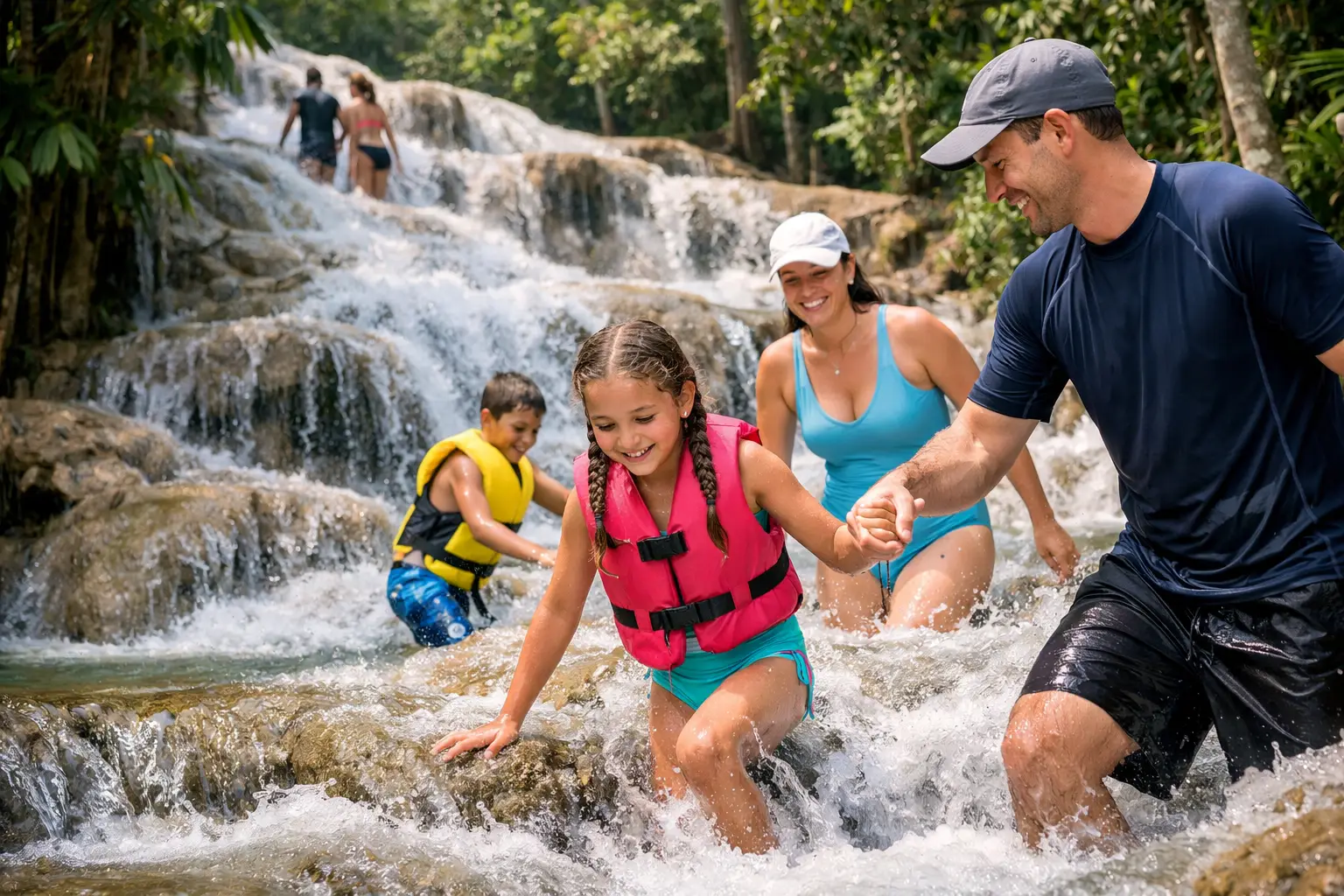
A family photo at Dunn’s River Falls looks effortless: everyone holding hands, climbing through clear water, with the Caribbean waiting below. The real question parents need answered before arriving is, can kids climb Dunn’s River Falls safely and enjoyably? For many children, yes. But the best choice depends on their age, confidence in moving water, footwear, the day’s conditions, and whether they are ready for a physical activity rather than a casual pool visit.
Dunn’s River Falls is one of Jamaica’s most memorable family attractions because children can experience the waterfall rather than simply look at it. The climb follows a terraced river over wet limestone steps, shallow pools, and uneven natural surfaces. It is exciting, scenic, and manageable for many families when parents plan honestly around their child’s ability.
Can Kids Climb Dunn’s River Falls?
Most school-age children can take part in the guided climb when accompanied by a responsible adult and when conditions are suitable. There is no single age that guarantees a great experience. A confident 6-year-old who listens well, wears proper water shoes, and is comfortable getting splashed may enjoy it more than an anxious older child who dislikes slippery ground or rushing water.
The climb is not a race, and children do not need to be strong swimmers to participate in the main waterfall route. However, they do need to be comfortable standing and walking in moving water. Guides typically organize climbers into a linked line, with guests holding hands as they move upward. That structure helps with balance, but it does not remove the need for parents to stay close and attentive.
For toddlers, very young children, or kids who become frightened in unfamiliar water, the full climb may not be the right fit. Families can still enjoy the lower areas, watch the falls, take photos, and spend time near the beach. Choosing not to climb is not missing the attraction. It is often the better call when it keeps the day relaxed.
What the Climb Feels Like for Children
The waterfall is beautiful, but it is a natural environment. Rocks can be slick, the current can push against little legs, and the water can feel cooler than children expect. Some sections are easy enough to walk through, while others require stepping up, crouching under a small cascade, or accepting a guide’s hand for support.
Children who enjoy adventure playgrounds, creek walks, swimming, and active outdoor excursions usually adapt quickly. They tend to love the feeling of reaching each level and standing beneath the water. Children who prefer predictable footing may find the first few minutes uncomfortable, especially if the group is moving faster than they would like.
Parents should set the right expectation before arrival. Explain that they will get wet, their shoes will stay wet, and they may need to hold hands with the group. Tell them it is okay to speak up if they need help. A child who knows what is coming is far more likely to enjoy the climb.
The group pace matters
The guided climb moves at a shared pace. That is useful for safety and makes the experience social, but it can be challenging for a child who wants to stop often or who needs extra reassurance. During busy periods, groups may be larger, which can make the activity feel more energetic and less flexible.
If your family includes young or cautious climbers, an earlier visit is often more comfortable. Arriving before the busiest part of the day can mean cooler temperatures, a calmer start, and more time to settle in without feeling rushed. A private transportation plan also gives your family more control over when you arrive and how long you stay.
How to Decide if Your Child Is Ready
A quick conversation at home can help you make the decision. Ask whether your child is comfortable walking on wet surfaces, being splashed in the face, and holding hands with unfamiliar people in a group. If the answer is an enthusiastic yes, they are likely a good candidate for the climb.
Consider their behavior, not only their age. A child who follows instructions, waits their turn, and stays near a parent is generally better prepared than a child who tends to bolt ahead or freeze when surprised. The guides know the falls well, but parents are still responsible for supervising their own children throughout the activity.
It is also reasonable to skip the climb if your child has a recent injury, trouble with balance, a strong fear of water, or footwear that does not provide secure traction. Jamaica offers plenty of memorable alternatives. A beach stop, a scenic drive, a cave visit, or another family-friendly attraction can make the day feel special without forcing an activity that does not suit everyone.
What Kids Should Wear at Dunn’s River Falls
Proper footwear makes the biggest difference. Water shoes with closed toes and a secure sole are the best option. They protect feet from rough rock and help children grip wet surfaces. Flip-flops, loose sandals, bare feet, and shoes that can slide off are poor choices for the climb.
A swimsuit or lightweight clothes that can get fully wet work well. Avoid heavy cotton items, which can become uncomfortable once soaked. A rash guard can help protect children from sun exposure while they are in and around the water, and a change of dry clothes is essential for the ride afterward.
Bring towels, sunscreen, and a waterproof bag for phones, wallets, and dry clothing. If your child uses glasses, consider a secure strap. Keep jewelry and valuables to a minimum. The point is to let children focus on the experience rather than worry about losing something in the water.
Life jackets and guide instructions
Depending on your child’s age, size, and confidence, a life jacket may be appropriate or required based on on-site procedures. Follow the directions given by the attraction staff and guides on the day. Water levels, weather, and operational decisions can change, so current instructions always take priority over plans made before your trip.
Encourage children to listen closely at the start. They should keep both hands free when climbing, avoid jumping between rocks, and tell an adult immediately if they feel unsteady. Parents should avoid carrying bulky bags or trying to film every step. Staying balanced and keeping contact with your child is more valuable than getting a perfect video.
When Families Should Choose the Beach Instead
Dunn’s River Falls has a beach area where the river meets the sea, and it can be an excellent alternative for families who do not want to complete the waterfall climb. This is especially helpful if siblings have very different comfort levels. One child may be eager to climb with an adult, while another is happier playing by the shore.
The beach option also works well after a long cruise morning, a late arrival in Ocho Rios, or a day when children are already tired from travel. Vacation schedules do not need to be packed to be worthwhile. A shorter visit with time to enjoy the scenery can be a better family memory than pushing through an activity when everyone is hungry, overheated, or frustrated.
Weather can also affect the decision. After heavy rain, the water may be stronger and the rocks may feel more challenging. If staff adjust access or recommend an alternative route, take that guidance seriously. Natural attractions are at their best when families stay flexible.
Plan Transportation Around Your Family’s Pace
For families staying in Montego Bay, Ocho Rios, Runaway Bay, Falmouth, or elsewhere on the north coast, transportation can shape the entire Dunn’s River Falls experience. Children are more likely to enjoy the climb when they arrive rested, have dry clothes available afterward, and are not worried about finding their way back to the resort.
A planned excursion or private driver makes it easier to schedule an arrival time that works for your family, build in a meal stop, and keep towels and extra clothing in the vehicle. Island Drive Tours can be a practical option for visitors who want organized transportation and a Jamaica itinerary built around their group’s needs.
Before booking, share the ages of your children and any concerns about water confidence or mobility. A good plan leaves room for changing your mind once you see the falls. The best family day is not measured by whether every person reaches the top. It is measured by whether everyone feels safe, included, and excited to talk about Jamaica on the ride home.