If you are asking is Blue Hole Jamaica safe, the short answer is yes – for most travelers, it is generally safe when you visit with the right expectations, follow local guidance, and avoid treating it like a risk-free resort pool.
Blue Hole is one of the most popular natural attractions near Ocho Rios for a reason. The water is strikingly blue, the setting feels more tucked away than larger tourist sites, and the experience is more adventurous than a standard sightseeing stop. That same appeal is also why safety questions come up so often. Blue Hole is not a polished theme-park attraction. It is a natural river and waterfall area with rocks, uneven ground, rope swings, cliff jumps, and slippery surfaces. Safe for many visitors? Yes. Safe in every condition for every person? No.
Is Blue Hole Jamaica safe compared to other attractions?
Compared with other well-known Jamaican attractions, Blue Hole usually feels more active and less controlled. Dunn’s River Falls, for example, is busy, structured, and easier for travelers who want a more managed experience. Blue Hole tends to feel freer and more adventurous, which many visitors love, but that means your safety depends more on your choices.
That does not make Blue Hole unsafe by default. It means travelers should understand what kind of attraction it is. If you are comfortable walking on natural terrain, listening to guides, and skipping any activity that feels beyond your comfort level, Blue Hole can be a very enjoyable stop. If you want flat pathways, railings everywhere, and minimal physical effort, this may not be your best fit.
What makes Blue Hole feel safe for visitors
The attraction is well known on Jamaica’s north coast and is visited by tourists regularly. Many guests go without any problems at all. There are guides on site, staff are used to helping visitors through the area, and the core experience is not unusually difficult for healthy adults who use common sense.
Another factor is that many visitors arrive through organized transportation or tours rather than trying to find the location on their own. That removes some of the confusion around directions, parking, timing, and local logistics. For first-time visitors to Jamaica, that matters. A smoother arrival usually leads to a better and safer experience.
Water-based attractions also tend to feel safer when people know what to expect before they arrive. Blue Hole is not only about swimming. It can include climbing around wet rocks, entering and exiting natural pools, and deciding whether to participate in higher-adrenaline activities like jumping. Visitors who understand that ahead of time usually make better decisions once they are there.
The real safety risks at Blue Hole
The biggest risks at Blue Hole are physical, not typically criminal. Slippery rocks are the most common issue. Even fit travelers can lose their footing when surfaces are wet and uneven. Water shoes with grip help, but they do not remove the risk completely.
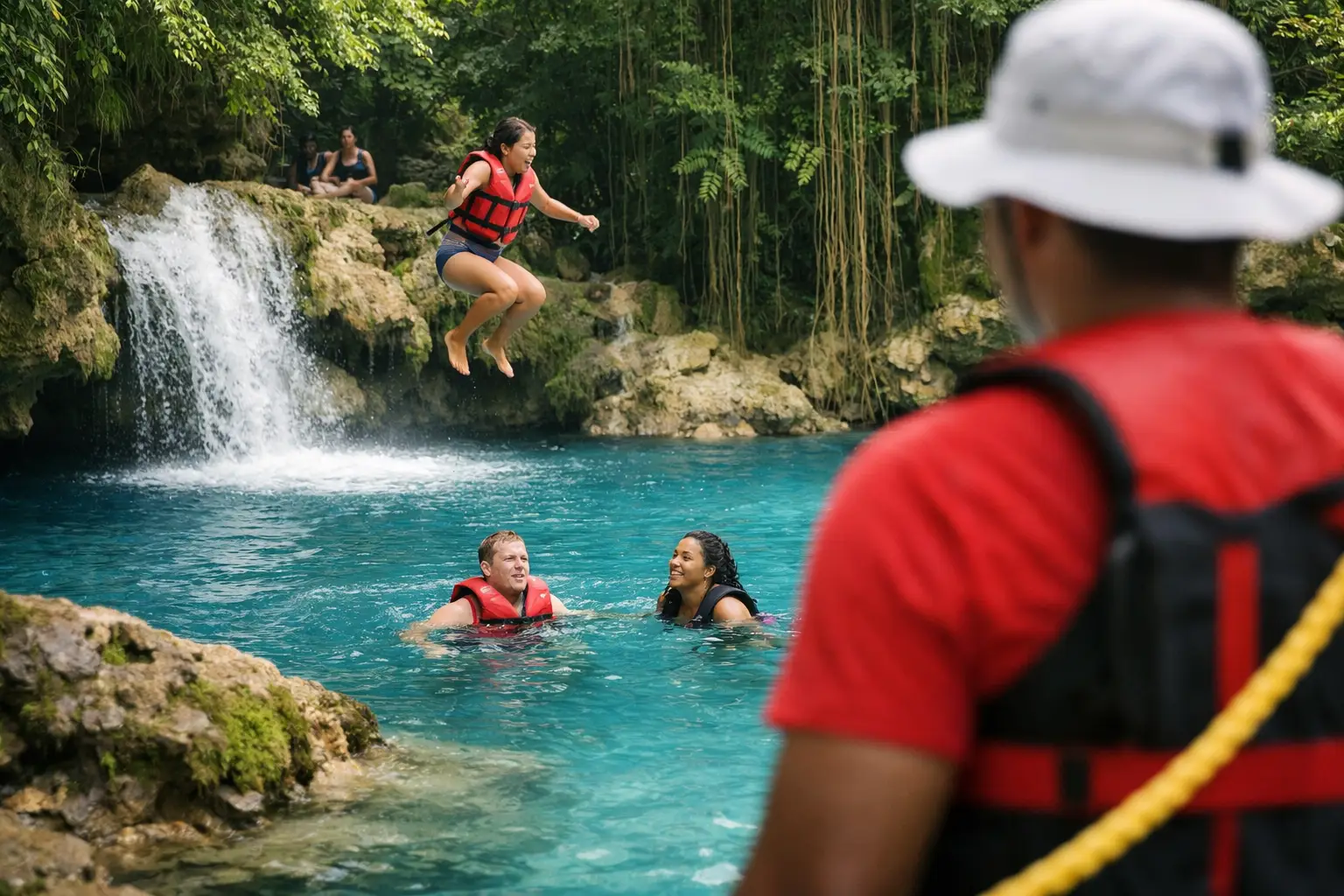
Jumping is another major factor. Some visitors see others leap into the water and feel pressure to do the same. That is where judgment matters. Heights can look lower or easier from a distance than they feel in person. If you are unsure, skip it. You can enjoy Blue Hole fully without jumping from any platform or ledge.
Water conditions can also change. Heavy rain can affect currents, water clarity, and footing. A spot that feels calm on one day can feel more forceful on another. This is one reason local guidance matters. Staff and guides usually know when an area is fine for swimming and when extra caution is needed.
There is also the basic issue of personal fitness. Blue Hole is not ideal for every traveler. If you have mobility limitations, balance concerns, recent injuries, or a strong fear of heights or deep water, parts of the experience may feel stressful rather than fun. Families with young kids can still visit, but parents should keep a closer eye than they might at a standard beach.
Who should be more cautious
Not every traveler needs to approach Blue Hole the same way. Strong swimmers, active couples, and adventure-minded groups often find it manageable and exciting. Older travelers, non-swimmers, and anyone recovering from an injury should be more selective about what they do on site.
Children can enjoy Blue Hole, but it depends on age, confidence in water, and how closely adults supervise them. The environment is natural and fast-moving. This is not the kind of attraction where parents should assume staff will watch every child at every moment.
Cruise passengers should also think about timing. If you are visiting during a port day, delays matter. A rushed visit can lead to poor decisions, especially if people start skipping safety instructions or hurrying on wet surfaces. Give yourself enough buffer so the day stays relaxed.
How to visit Blue Hole more safely
The safest Blue Hole visits usually have one thing in common: the traveler does not try to force every activity. You do not need to swing, jump, climb every section, or push through fear just because others are doing it.
Wear water shoes or sturdy footwear with grip instead of flip-flops. Listen to the guide, especially around entry points, rock surfaces, and current conditions. Keep your hands free when moving around wet areas. If you bring a phone, secure it instead of carrying it loosely while climbing.
It also helps to be honest about your swimming ability. If you are not a strong swimmer, say so. Guides can usually direct you toward the easiest parts of the experience. The same goes for kids. A child who is comfortable in a hotel pool may not react the same way in a natural river setting.
Booking transportation or an organized excursion can make the day more straightforward. For many travelers, that is one of the easiest ways to reduce avoidable stress around the visit. A provider like Island Drive Tours can simplify the route, timing, and overall flow so you can focus on the attraction itself rather than the logistics.
Is Blue Hole Jamaica safe for solo travelers and families?
For solo travelers, Blue Hole is generally safe if you arrive in a sensible way, keep your belongings secure, and use the same judgment you would at any outdoor attraction. The larger concern is usually not being alone in Jamaica, but overestimating what you want to do once you are at the site.
For families, the answer is more mixed. Blue Hole can be a great family stop, but it is better for families with older children or younger kids who are calm around water and closely supervised. Parents should expect to stay engaged throughout the visit. If your family prefers gentler sightseeing with less climbing and fewer slippery surfaces, another attraction may be the better fit.
Couples and small groups often enjoy Blue Hole the most because they can move at their own pace. Some members of the group can jump or swim aggressively, while others can stay with the easier viewing and swimming areas. That flexibility is part of what makes the attraction appealing.
Common mistakes that create problems
Most bad experiences at Blue Hole start with avoidable choices. Wearing the wrong shoes is one. Ignoring instructions is another. So is assuming that because other visitors are doing something, it must be safe for you.
Alcohol before water activities is also a bad mix, even if the atmosphere feels casual and vacation-friendly. The same applies to carrying valuables carelessly or leaving items unsecured. Blue Hole is best enjoyed when you keep things simple and practical.
Another mistake is treating every online video as a realistic preview. Social media clips usually show the most dramatic jumps and swings, not the careful footing, hesitation, or assistance that often happens around them. Your trip does not need to look extreme to be worthwhile.
So, should you go?
If you want a scenic, active, and memorable freshwater attraction near Ocho Rios, Blue Hole is absolutely worth considering. For most visitors, the answer to is Blue Hole Jamaica safe is yes – with the understanding that this is a natural adventure site, not a zero-risk attraction.
The best approach is simple. Go with realistic expectations, wear the right footwear, listen to local guidance, and skip anything that does not feel right for you. Blue Hole is at its best when you enjoy the setting without trying to prove anything.